
Tesamorelin
A$429
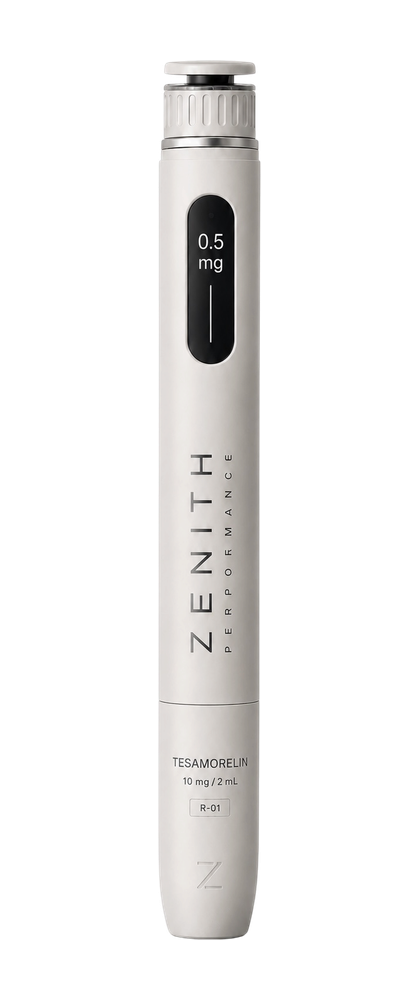
Tesamorelin
Tesamorelin is a synthetic analogue of growth hormone-releasing hormone (GHRH) that stimulates the pituitary gland to release growth hormone through the body's natural pathway. It has been studied and approved in specific clinical settings involving visceral adipose tissue. Suitability depends on medical history, medications, glucose status and bloodwork.
Strength
10 mg
Volume
2 mL
Format
Dual-chamber pen
Administration
Subcutaneous injection
Storage
Refrigerated 2–8°C
Product code
TSM10
Overview
Tesamorelin is a GHRH analogue — a synthetic version of the hormone that signals the pituitary gland to release growth hormone. Unlike direct GH administration, it works through the body's own regulatory feedback system, which may offer a more physiological response pattern.
It has been studied and is FDA-approved for the treatment of HIV-associated lipodystrophy involving excess visceral abdominal fat. Research in other metabolic contexts is ongoing. Individual responses, particularly in people without this condition, have not been established in large trials.
Tesamorelin requires monitoring of IGF-1 and glucose markers. It is supplied as a compounded product following assessment and practitioner review. Off-label use carries additional uncertainty.
Commonly considered for
Visceral fat pathway
Studied in specific clinical contexts involving excess visceral abdominal fat, particularly in HIV-associated lipodystrophy.
Body composition consideration
May be considered where body-composition markers form part of a clinician-guided protocol.
Growth hormone signalling
Acts through the body's natural GHRH pathway to support pulsatile GH release.
Metabolic monitoring context
Requires regular monitoring of glucose, IGF-1 and related biomarkers during use.
How it works
Signal
Tesamorelin binds to GHRH receptors on the anterior pituitary, mimicking the body's natural growth hormone-releasing hormone.
Response
The pituitary releases GH in a pulsatile pattern, which promotes IGF-1 production and supports lipolysis, particularly in visceral fat stores.
Monitoring
IGF-1, fasting glucose and HbA1c should be monitored at baseline and during use. Elevated IGF-1 or worsening glucose control may require dose review or discontinuation.
Often stacked with
Suitability, cautions and safety
Important: This information is for educational purposes only. It does not replace assessment, diagnosis or medical advice from a qualified clinician. Suitability varies by individual health history, medications and circumstances.
Active or history of cancer
Growth hormone pathways can stimulate cell growth. Any personal or family history of cancer, particularly GH-responsive tumours, requires specialist review.
Diabetes or poor glucose control
Tesamorelin can raise blood glucose and worsen insulin resistance. People with diabetes or abnormal HbA1c require careful monitoring.
Pituitary or hypothalamic disorders
Existing hypothalamic-pituitary axis dysfunction may affect response and safety. Specialist assessment required.
Fluid retention, carpal tunnel or joint swelling
GH elevation can cause fluid retention, joint discomfort or carpal tunnel syndrome.
Pregnancy, breastfeeding or trying to conceive
Safety data is not available. Clinical guidance required before use.
Competitive sport
GHRH analogues are prohibited under WADA anti-doping regulations.
Cardiovascular disease
GH elevation may affect cardiac function. Discuss with a clinician if you have a heart condition.
Answer each question honestly. If you answer Yes to any question, we recommend discussing this compound with a qualified clinician before proceeding.
Do you currently have cancer, or have you been treated for cancer?
Do you have diabetes or have you received abnormal blood sugar or HbA1c results?
Do you have a diagnosed pituitary or hypothalamic condition?
Are you pregnant, breastfeeding or trying to conceive?
Are you subject to anti-doping testing in competitive sport?
Do you have a diagnosed cardiovascular condition?
Are you currently using growth hormone, another GHRH product, or insulin?
If you have any of the following, discuss with a clinician before purchasing or using this product
- Swelling of hands, feet or face
- Numbness or tingling in the hands (possible carpal tunnel)
- Joint pain or stiffness
- Excessive thirst or frequent urination
- Vision changes
- Persistent severe headaches
- Rapid or unexplained weight gain
Adverse effects and safety signals
Common effects
Generally mild and often resolve without intervention. Monitor and report if persistent.
- Injection-site redness, swelling or bruising
- Fluid retention or peripheral oedema
- Arthralgia (joint pain) — A common dose-related effect of GH elevation.
- Headache
- Nausea
- Muscle discomfort
Discuss promptly with a clinician
If any of the following occur, stop use and contact your prescribing practitioner.
- Worsening or persistent oedema
- Carpal tunnel symptoms — numbness, tingling in the hands
- Significant blood glucose elevation
- Severe joint pain
- Unusual visual symptoms
Seek emergency help immediately
If you experience any of the following, call emergency services (000 in Australia) immediately. These may be signs of a serious allergic reaction or medical emergency.
- Difficulty breathing or throat tightening
- Facial, lip or tongue swelling
- Widespread hives or rash
- Fainting or collapse
Important: Before use, tell your practitioner if you have ever had an allergic reaction to any peptide, injection product or medicine. Allergic reactions can occur even with first use. I understand that I should seek urgent medical help if I experience signs of a serious allergic reaction.
Medications and interactions
Medicines and treatments to discuss
Tesamorelin may interact with insulin, diabetes medications, glucocorticoids (steroids), thyroid hormones, sex hormones, other GH-related compounds and anticonvulsants. Disclose all medications, supplements and other peptides. GH pathways can affect the efficacy of insulin and alter glucose-lowering medication requirements.
Bloodwork and monitoring
The following tests may be considered at baseline and during use. Your Zenith practitioner will advise on what is relevant for you.
Baseline (before use)
- IGF-1
- Fasting glucose
- HbA1c
- Lipid profile
- Full blood count
- Thyroid function
Follow-up (during use)
- IGF-1
- Fasting glucose
- HbA1c
- Lipid profile
Administration
Administer by subcutaneous injection into the abdomen.
Daily injection, typically in the morning.
Follow the specific dosing and timing guidance provided with your protocol card.
Use a fresh needle for each injection and dispose of sharps safely.
Do not inject into scar tissue, bruised or irritated skin.
Storage and handling
Store unopened pens refrigerated at 2–8°C.
Once activated, use within 28 days when stored refrigerated.
Do not freeze.
Protect from direct light.
Do not use if the solution appears cloudy or discoloured.
Research context: FDA-approved for HIV-associated lipodystrophy. Extensive clinical trial data available.
Frequently asked
Tesamorelin is a synthetic GHRH analogue that stimulates the pituitary to release growth hormone through the body's own regulatory pathway. It is FDA-approved for HIV-associated lipodystrophy.
Yes. IGF-1, fasting glucose and HbA1c should be monitored at baseline and during use. All Zenith supply requires ongoing practitioner review.
Combinations involving GH-related compounds require careful clinical assessment. Discuss stacking with your practitioner.
Tesamorelin can worsen glucose control. People with diabetes require careful clinical supervision and glucose monitoring before and during use.
Regulatory and classification note: Tesamorelin is FDA-approved for HIV-associated lipodystrophy. Off-label use in other contexts is investigational and not TGA-approved. Individual outcomes cannot be guaranteed. This information is educational and does not constitute medical advice.
Regulatory & safety information
Tesamorelin is supplied subject to suitability assessment and applicable UAE regulatory requirements. Information provided is general and is not a substitute for professional medical advice, diagnosis or treatment.
Always consult a qualified healthcare professional before starting, changing or stopping any product, particularly if you are pregnant, breastfeeding, under 18, or managing a medical condition.
Why treatment isn't self-selected
Treatment decisions need context.
Selecting a treatment option is the starting point. What's clinically appropriate for you is determined by three things together.
Your bloodwork
Relevant biomarkers help identify which treatment options may be appropriate — and which should be avoided.
Your health history
Existing conditions, medications and goals are considered alongside your results, not in isolation.
Practitioner review
A licensed practitioner reviews every request before anything is approved, dosed or supplied.
Before you choose
Your bloodwork can change the conversation.
Recent bloodwork gives your practitioner more to work with — helping identify what may be appropriate, what should be avoided, and where a different option might be better suited to your results.
Already uploaded results? Your practitioner reviews them alongside any treatment request — no need to repeat information.
Optional at this stage. Required before final approval.
Ready to move forward?
Three ways to continue.
Upload your bloodwork
Already have recent results? Upload them so your practitioner can review your treatment request in context.
Purchase a blood test
No recent results? Order an at-home Zenith blood test to establish your baseline before choosing treatment.
Start your assessment
Begin the health assessment now — you can add bloodwork and treatment selections at any stage.
Purchase
Tesamorelin
Supplied following assessment, bloodwork and practitioner review.
Price
A$429
Ready to start?
Complete an assessment and get access to Tesamorelin through a tailored protocol.