Evidence first
Human trial findings are separated from hypotheses and unknowns.
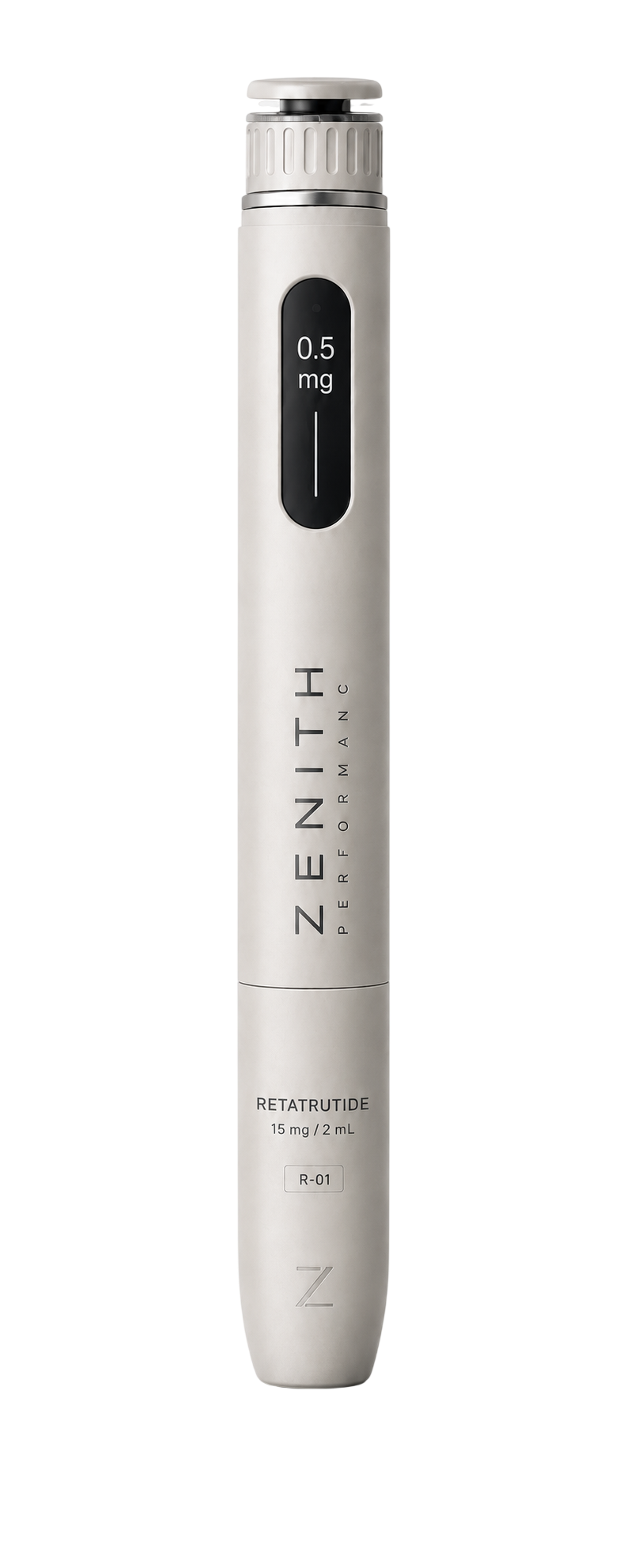
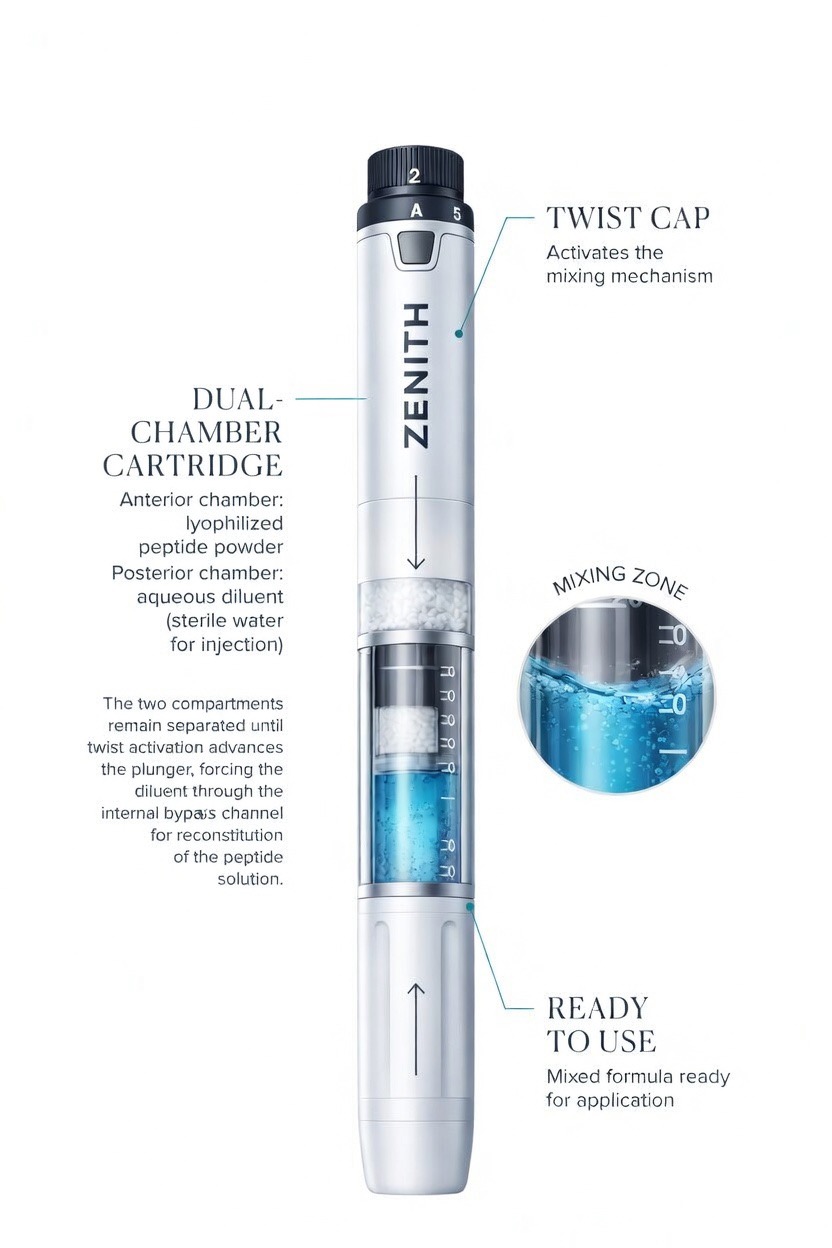
Device shown for design context
Metabolic research
A closer look at triple-receptor metabolic science.
Retatrutide is an investigational medicine being studied for obesity and related metabolic conditions. It activates GIP, GLP-1 and glucagon receptors. The research is notable, but the medicine is not approved for routine clinical use and long-term benefit–risk remains under evaluation.
Not approved for routine clinical use by major medicines regulators at the time of writing. Trial participation, prescribing and supply rules vary by region and must be verified by a qualified clinician.
01 · The proposition
This page distinguishes observed human evidence from biological rationale and what remains unknown.
Human trial findings are separated from hypotheses and unknowns.
Suitability requires individual medical review, not a product quiz alone.
Baseline markers can help establish context and monitoring needs.
02 · Areas under study
Substantial mean weight reductions were reported in a phase 2 obesity trial.
Trial averages are not personal predictions; phase 3 confirmation and longer follow-up are ongoing.
Studies have reported changes across several cardiometabolic measures alongside weight change.
The clinical meaning depends on baseline health, concurrent care and individual response.
The three-receptor mechanism is designed to influence appetite, nutrient signalling and energy expenditure.
Mechanism does not guarantee an outcome, and effects can differ materially between people.
03 · How it is being studied
The mechanism is biologically plausible, but receptor activity alone cannot predict an individual clinical result.
GIP
GIP receptor activity is being studied for its role in insulin response, energy storage and metabolic coordination.
GLP-1
GLP-1 receptor activity can influence appetite, gastric emptying and glucose-dependent insulin signalling.
Glucagon
Glucagon receptor activity may increase energy expenditure while also requiring careful metabolic and hepatic assessment.
04 · Safety
Retatrutide has no established routine-use safety profile. Trial reports describe a class-consistent pattern of gastrointestinal effects, while uncommon and long-term risks remain under investigation.
05 · Evidence ladder
Human evidence
A randomised phase 2 trial reported dose-dependent weight reduction over 48 weeks, with gastrointestinal adverse events most common during escalation.
Confirmation underway
Multiple phase 3 studies are evaluating efficacy and safety across obesity and related conditions. Full programme results are not yet available.
Mechanistic rationale
Early clinical and preclinical work supports the biological rationale for combining GIP, GLP-1 and glucagon receptor activity.
Not established
Approved indications, standard prescribing information, broad population safety and long-term outcomes have not been established.
06 · Bloodwork bridge
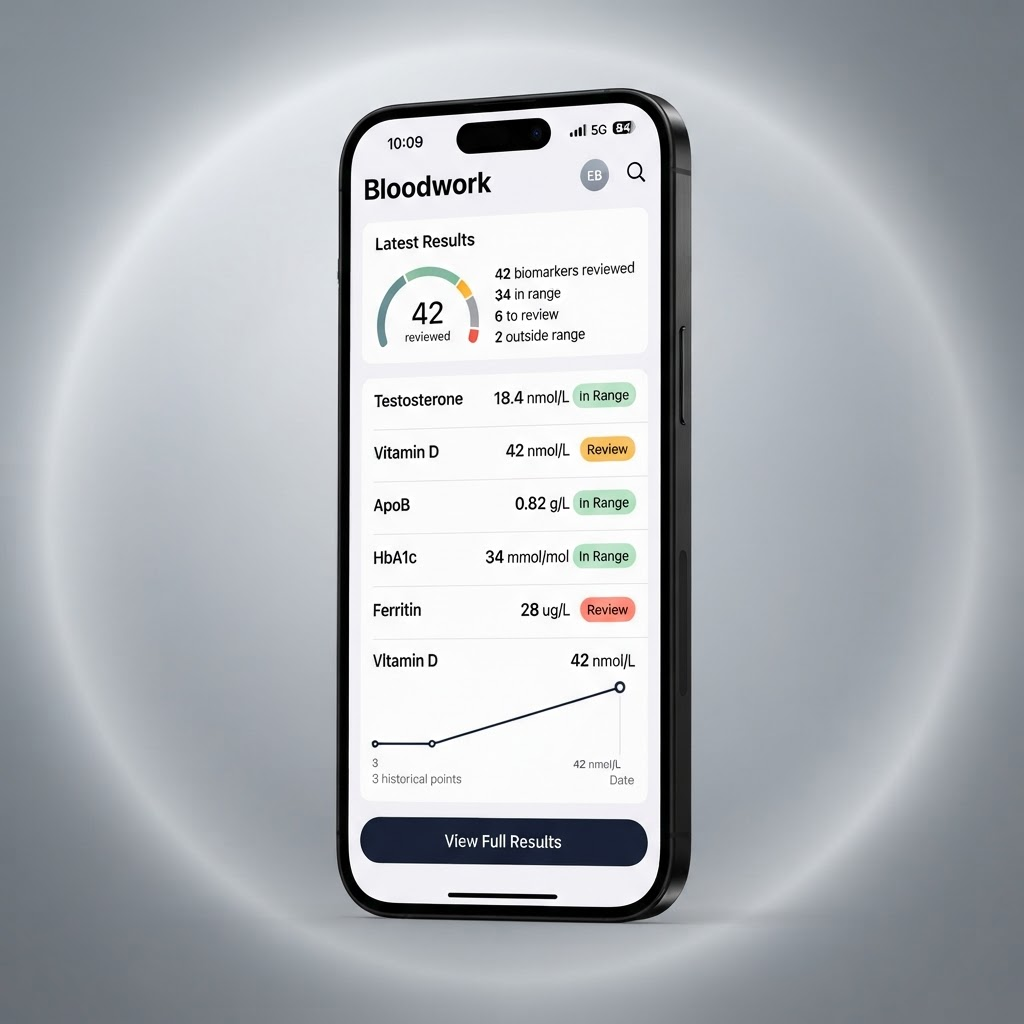
Bloodwork cannot determine suitability on its own. It can help a clinician understand metabolic context, identify issues needing attention and choose an appropriate monitoring plan.
07 · Practitioner pathway
A safe decision starts with context and remains reviewable over time.
Start with your goals, medical history, current medicines and available bloodwork.
A practitioner assesses contraindications, evidence, alternatives and local availability.
If any treatment is appropriate, the clinician explains expected benefits, uncertainties and monitoring.
Symptoms, adherence, relevant measurements and follow-up testing inform each next decision.
08 · FAQ
Retatrutide remains investigational and is not approved for routine clinical use by major medicines regulators at the time of writing. Regulatory status and lawful access can change and vary by country, so a qualified clinician must verify the current position locally.
09 · Continue exploring
Sources and access
Secondary access action
Adding an item does not confirm suitability, prescribing, availability or supply. Existing clinical review and checkout controls still apply.
Medical information only. This page does not diagnose, prescribe or recommend treatment. Retatrutide is investigational; outcomes, risks, lawful access and regulatory status vary. Seek urgent medical care for serious symptoms.